What is Low-Side Float Valve?
A Low-Side Float Valve is a type of expansion device used in refrigeration systems, particularly in low-temperature applications. It is also known as a low-pressure float valve or simply a float valve. This valve is part of the liquid refrigerant control system and is typically found on the low-pressure side of the system.
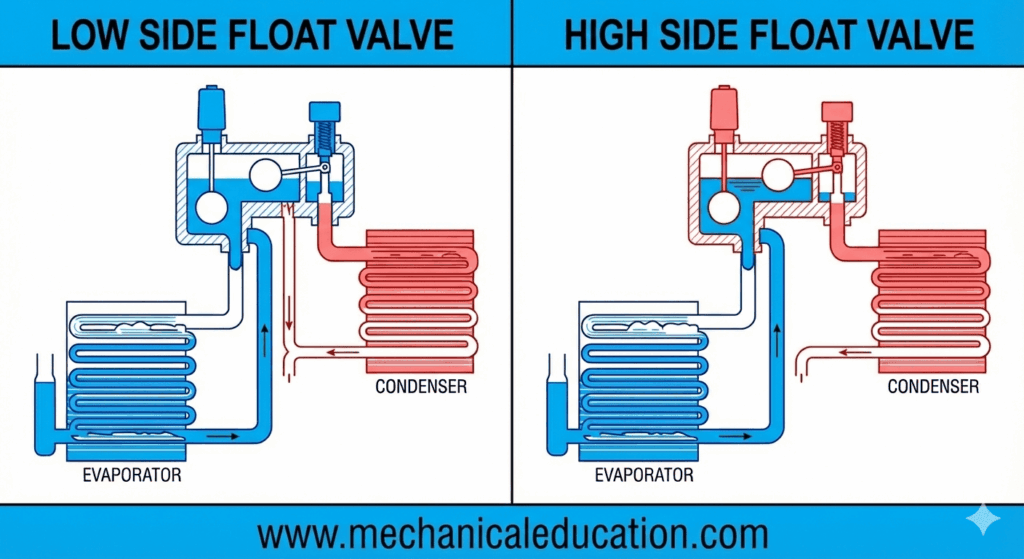
Here’s how a Low-Side Float Valve works:
- Operation:
- The Low-Side Float Valve operates based on the principle of buoyancy. It contains a float mechanism that rises or falls depending on the liquid refrigerant level in the evaporator.
- Evaporator Regulation:
- As the refrigerant evaporates in the evaporator coil, the float valve regulates the flow of liquid refrigerant into the evaporator to maintain a desired level. This ensures that the evaporator remains adequately filled with liquid refrigerant.
- Buoyancy Effect:
- When the liquid refrigerant level in the evaporator drops, the float mechanism sinks, opening the valve and allowing more liquid refrigerant to enter. Conversely, when the liquid level rises, the float rises, reducing the flow of refrigerant into the evaporator.
- Preventing Flooding:
- The primary purpose of the Low-Side Float Valve is to prevent the evaporator from being flooded with liquid refrigerant. Flooding can lead to inefficient heat exchange, reduced system efficiency, and potential compressor damage.
- Maintaining Optimal Operation:
- By regulating the refrigerant level in the evaporator, the Low-Side Float Valve helps maintain optimal operation and ensures that the evaporator operates with sufficient liquid refrigerant for efficient heat absorption.
- Low-Temperature Applications:
- Low-Side Float Valves are commonly used in low-temperature refrigeration applications, such as walk-in freezers, ice cream machines, and other environments where precise control of the evaporator’s liquid refrigerant level is crucial.
It’s important to note that Low-Side Float Valves are typically used in conjunction with a high-pressure float valve on the high-pressure side of the system. Together, these valves help maintain proper refrigerant levels in both the high and low-pressure sides, preventing issues like flooding or starving of the evaporator.
While Low-Side Float Valves are effective in certain applications, other expansion devices, such as Thermostatic Expansion Valves (TXVs) and electronic expansion valves, are more commonly used in air conditioning systems and applications where precise control of superheat is required. The choice of the expansion device depends on the specific requirements of the refrigeration system.
Applications of Low-Side Float Valve
Low-Side Float Valves find applications in low-temperature refrigeration systems where precise control of the liquid refrigerant level in the evaporator is essential. These valves are commonly used in various commercial and industrial applications to maintain optimal operation and prevent issues like evaporator flooding. Here are some specific applications of Low-Side Float Valves:
- Walk-In Freezers:
- Low-Side Float Valves are frequently employed in walk-in freezers to regulate the flow of liquid refrigerant into the evaporator coil. This ensures efficient heat absorption and prevents the evaporator from being flooded.
- Ice Cream Machines:
- In the production of ice cream and other frozen desserts, Low-Side Float Valves are used to control the liquid refrigerant level in the evaporator. This is crucial for maintaining the proper freezing conditions and ensuring the desired product quality.
- Blast Freezers:
- Blast freezers, used for rapidly freezing food products, often incorporate Low-Side Float Valves to regulate the liquid refrigerant flow. This helps achieve quick and efficient freezing.
- Refrigerated Warehouses:
- Facilities with refrigerated storage areas, such as cold storage warehouses, may use Low-Side Float Valves to control the refrigerant level in the evaporators of their refrigeration systems.
- Frozen Food Display Cases:
- Display cases in supermarkets and convenience stores that showcase frozen food products may utilize Low-Side Float Valves to ensure precise control of the refrigerant in the evaporator coils.
- Ice Machines:
- Ice-making equipment, including ice machines and ice cube makers, may incorporate Low-Side Float Valves to regulate the liquid refrigerant level during the ice production process.
- Cold Rooms:
- Low-Side Float Valves can be found in cold rooms and refrigerated storage areas to maintain the appropriate liquid refrigerant levels for effective cooling.
- Low-Temperature Process Cooling:
- Industrial processes requiring low-temperature cooling, such as certain chemical processes or laboratory applications, may use Low-Side Float Valves for precise control of the refrigerant flow.
- Specialized Refrigeration Applications:
- Low-Side Float Valves are employed in various specialized applications where low-temperature refrigeration is necessary, such as in research and development environments or manufacturing processes that demand controlled cooling.
- Commercial Refrigeration Systems:
- In general, Low-Side Float Valves are a common component in commercial refrigeration systems where maintaining optimal evaporator conditions is critical for preserving and storing temperature-sensitive products.
The use of Low-Side Float Valves ensures that the evaporator operates with the right amount of liquid refrigerant, preventing issues like evaporator flooding and contributing to the overall efficiency and reliability of the refrigeration system in low-temperature applications.
What is High-Side Float Valve?
A High-Side Float Valve is a type of expansion device used in refrigeration systems, particularly in high-temperature applications. It is also known as a high-pressure float valve or simply a float valve. Similar to the Low-Side Float Valve, the High-Side Float Valve is part of the liquid refrigerant control system, but it is typically installed on the high-pressure side of the system.
Here’s how a High-Side Float Valve works:
- Operation:
- The High-Side Float Valve operates based on the principle of buoyancy. It contains a float mechanism that rises or falls depending on the liquid refrigerant level in the condenser.
- Condenser Regulation:
- As the refrigerant condenses in the condenser coil, the High-Side Float Valve regulates the flow of liquid refrigerant into the condenser to maintain a desired level. This ensures that the condenser remains adequately filled with liquid refrigerant.
- Buoyancy Effect:
- When the liquid refrigerant level in the condenser drops, the float mechanism sinks, opening the valve and allowing more liquid refrigerant to enter. Conversely, when the liquid level rises, the float rises, reducing the flow of refrigerant into the condenser.
- Preventing Overheating:
- The primary purpose of the High-Side Float Valve is to prevent the condenser from being starved of liquid refrigerant. Starvation can lead to overheating and reduced efficiency in the condenser.
- Maintaining Optimal Operation:
- By regulating the refrigerant level in the condenser, the High-Side Float Valve helps maintain optimal operation and ensures that the condenser operates with sufficient liquid refrigerant for effective heat rejection.
- High-Temperature Applications:
- High-Side Float Valves are commonly used in high-temperature refrigeration applications, such as air conditioning systems for residential and commercial buildings, where precise control of the condenser’s liquid refrigerant level is crucial.
It’s important to note that High-Side Float Valves are typically used in conjunction with a low-pressure float valve on the low-pressure side of the system, often called a Low-Side Float Valve. Together, these valves help maintain proper refrigerant levels in both the high and low-pressure sides, preventing issues like flooding or starving of the condenser and evaporator, respectively.
While High-Side Float Valves are effective in certain applications, other expansion devices, such as Thermostatic Expansion Valves (TXVs) and electronic expansion valves, are more commonly used in air conditioning systems and applications where precise control of superheat is required. The choice of the expansion device depends on the specific requirements of the refrigeration system.
Applications of High-Side Float Valve
High-Side Float Valves find applications in refrigeration systems, particularly in high-temperature applications where precise control of the liquid refrigerant level in the condenser is essential. These valves play a crucial role in maintaining optimal operation, preventing overheating, and ensuring efficient heat rejection in various settings. Here are some specific applications of High-Side Float Valves:
- Air Conditioning Systems:
- High-Side Float Valves are commonly used in air conditioning systems for residential, commercial, and industrial applications. They regulate the flow of liquid refrigerant into the condenser, contributing to efficient heat rejection and cooling.
- Commercial Refrigeration Units:
- High-Side Float Valves can be found in commercial refrigeration systems, including display cases, walk-in coolers, and reach-in refrigerators, where precise control of the condenser’s liquid refrigerant level is crucial for optimal performance.
- Packaged Rooftop HVAC Units:
- Rooftop HVAC units, which are commonly used for heating, ventilation, and air conditioning in commercial buildings, may incorporate High-Side Float Valves to control the liquid refrigerant level in the condenser during the cooling process.
- Refrigerated Display Cabinets:
- Refrigerated display cabinets in supermarkets and convenience stores, which showcase perishable products, may use High-Side Float Valves to maintain proper condenser conditions and ensure efficient cooling.
- Centralized Cooling Systems:
- High-Side Float Valves can be part of centralized cooling systems that provide cooling for multiple areas within a facility. They help regulate the liquid refrigerant flow in the condenser for effective heat rejection.
- Data Center Cooling:
- Data centers, which generate significant heat from electronic equipment, may utilize High-Side Float Valves in their cooling systems to control the liquid refrigerant level in the condenser and maintain optimal operating temperatures.
- Industrial Process Cooling:
- High-Side Float Valves are employed in industrial processes where precise control of condenser conditions is critical for efficient cooling. This includes applications in manufacturing and chemical processing.
- Commercial HVAC Systems:
- High-Side Float Valves can be integrated into commercial HVAC systems to regulate the liquid refrigerant flow in the condenser during the air conditioning process.
- Heat Rejection Systems:
- Systems designed for heat rejection, such as those used in industrial processes or power plants, may incorporate High-Side Float Valves to ensure efficient cooling and temperature control.
- Chilled Water Systems:
- Chilled water systems that provide cooling for buildings may use High-Side Float Valves to maintain optimal condenser conditions and enhance the overall efficiency of the system.
The use of High-Side Float Valves contributes to the prevention of overheating in the condenser, ensuring that the system operates efficiently and effectively rejects heat in various high-temperature applications.
Low-Side Float Valve Advantages and Disadvantages
Advantages of Low-Side Float Valves:
- Prevention of Evaporator Flooding:
- One of the primary advantages of Low-Side Float Valves is their ability to prevent the evaporator from being flooded with excessive liquid refrigerant. This ensures optimal heat absorption and efficient operation.
- Maintaining Optimal Evaporator Conditions:
- By regulating the liquid refrigerant level in the evaporator, Low-Side Float Valves help maintain optimal conditions for heat exchange, contributing to the overall efficiency of the refrigeration system.
- Adaptability to Low-Temperature Applications:
- Low-Side Float Valves are well-suited for low-temperature applications, such as walk-in freezers and ice cream machines, where precise control of the evaporator is critical.
- Simple Design:
- The design of Low-Side Float Valves is relatively simple, making them easy to install and maintain. Their straightforward construction contributes to their reliability.
- Compatibility with Low-Pressure Systems:
- Low-Side Float Valves are designed to operate on the low-pressure side of the refrigeration system, making them compatible with systems where maintaining low pressures is essential.
- Cost-Effective:
- Compared to some other expansion devices with more complex designs, Low-Side Float Valves can be cost-effective, making them a practical choice for certain applications.
Disadvantages of Low-Side Float Valves:
- Limited Precision:
- While effective in preventing evaporator flooding, Low-Side Float Valves may not provide the same level of precision in refrigerant flow control as some other expansion devices, such as Thermostatic Expansion Valves (TXVs).
- Not Suitable for High-Temperature Applications:
- Low-Side Float Valves are typically designed for low-temperature applications. Using them in high-temperature environments may not be optimal, as they may struggle to maintain efficient operation.
- Potential for Overfeeding:
- In certain conditions, Low-Side Float Valves may lead to overfeeding of the evaporator, which can result in reduced efficiency and potential issues with the overall performance of the refrigeration system.
- Compatibility Concerns with Certain Refrigerants:
- Some Low-Side Float Valves may have limitations in terms of compatibility with specific refrigerants. It’s crucial to check the manufacturer’s specifications to ensure proper compatibility.
- May Require Regular Adjustments:
- Depending on the system and operating conditions, Low-Side Float Valves may require periodic adjustments to maintain optimal performance. This can be a consideration for ongoing maintenance requirements.
- Less Precise Control of Superheat:
- In comparison to expansion devices like TXVs, Low-Side Float Valves may offer less precise control over superheat, which can be a critical factor in some refrigeration applications.
While Low-Side Float Valves have their advantages, their selection should be based on the specific requirements and conditions of the refrigeration system. The choice of the expansion device depends on factors such as temperature range, system capacity, and the desired level of control.
High-Side Float Valve Advantages and Disadvantages
Advantages of High-Side Float Valves:
- Prevention of Condenser Starvation:
- High-Side Float Valves prevent the condenser from being starved of liquid refrigerant by regulating the flow based on the liquid refrigerant level. This helps maintain optimal conditions for efficient heat rejection.
- Efficient Heat Rejection:
- By ensuring a sufficient amount of liquid refrigerant in the condenser, High-Side Float Valves contribute to efficient heat rejection from the refrigeration system, enhancing overall system performance.
- Suitability for High-Temperature Applications:
- High-Side Float Valves are well-suited for high-temperature applications, such as air conditioning systems, where maintaining optimal condenser conditions is crucial for effective cooling.
- Prevention of Overheating:
- One of the primary advantages is the prevention of overheating in the condenser, which can occur if there is insufficient liquid refrigerant. High-Side Float Valves help maintain a balanced and controlled flow.
- Compatibility with High-Pressure Systems:
- Designed for operation on the high-pressure side of refrigeration systems, High-Side Float Valves are compatible with systems that operate at elevated pressures.
- Effective in Various Cooling Systems:
- High-Side Float Valves can be integrated into different cooling systems, including commercial HVAC units, centralized cooling systems, and industrial process cooling applications.
Disadvantages of High-Side Float Valves:
- Complex Design:
- High-Side Float Valves typically have a more complex design compared to some other expansion devices. This complexity can make them more challenging to install and maintain.
- Potential for Liquid Slugging:
- In certain conditions, High-Side Float Valves may be more prone to liquid slugging, where liquid refrigerant enters the compressor. This can lead to compressor damage and reduced efficiency.
- Less Common in Low-Temperature Applications:
- High-Side Float Valves are less commonly used in low-temperature applications, as they are primarily designed for high-temperature environments. Using them in low-temperature settings may not be as effective.
- Cost Considerations:
- The complexity of the design and the materials used in High-Side Float Valves may result in higher manufacturing and maintenance costs compared to simpler expansion devices.
- May Require Skilled Maintenance:
- Maintenance and adjustments to High-Side Float Valves may require skilled technicians due to the complexity of the design. This can lead to higher labor costs for maintenance activities.
- Potential for System Imbalance:
- In certain circumstances, if not properly adjusted or maintained, High-Side Float Valves may contribute to an imbalance in the refrigeration system, affecting overall performance.
As with any expansion device, the selection of High-Side Float Valves should consider the specific requirements of the refrigeration system, including temperature conditions, system capacity, and the desired level of control. Proper installation, adjustment, and maintenance are essential for ensuring optimal performance and preventing potential issues.
Difference between Low-Side Float Valves and High-Side Float Valves
Here is a comparison between Low-Side Float Valves and High-Side Float Valves in a table format:
| Aspect | Low-Side Float Valves | High-Side Float Valves |
|---|---|---|
| Location in the System | Installed on the low-pressure side (usually in the evaporator). | Installed on the high-pressure side (typically in the condenser). |
| Primary Function | Regulates the flow of liquid refrigerant into the evaporator to prevent flooding. | Regulates the flow of liquid refrigerant into the condenser to prevent starvation. |
| Temperature Range | Suitable for low-temperature applications (e.g., walk-in freezers). | Suitable for high-temperature applications (e.g., air conditioning systems). |
| Heat Exchange Control | Controls the liquid refrigerant level in the evaporator for optimal heat absorption. | Controls the liquid refrigerant level in the condenser for efficient heat rejection. |
| Complexity of Design | Typically simpler in design compared to high-side float valves. | May have a more complex design due to high-pressure requirements. |
| Common Applications | Walk-in freezers, ice cream machines, low-temperature refrigeration systems. | Air conditioning systems, commercial HVAC units, high-temperature applications. |
| Precision in Control | Offers good control in preventing evaporator flooding. | Helps prevent condenser starvation, providing effective control. |
| Compatibility with Pressure | Designed for low-pressure systems. | Designed for high-pressure systems. |
| Potential Issues | May lead to overfeeding of the evaporator in certain conditions. | May be more prone to liquid slugging and compressor damage if not properly maintained. |
| Maintenance Requirements | Generally simple design, maintenance is straightforward. | May require skilled technicians for adjustments and maintenance due to complexity. |
| Cost-Effectiveness | Often cost-effective compared to high-side float valves. | May have higher manufacturing and maintenance costs. |
It’s important to note that the suitability of either type of float valve depends on the specific requirements and conditions of the refrigeration system, including temperature range, system capacity, and the desired level of control.
Low-Side Float Valves:Frequently Asked Questions
1.What is a Low-Side Float Valve in a refrigeration system?
A Low-Side Float Valve is an expansion device used in refrigeration systems, primarily on the low-pressure side. It regulates the flow of liquid refrigerant into the evaporator to prevent flooding and maintain optimal operating conditions.
2.Where is the typical location for a Low-Side Float Valve in a refrigeration system?
Low-Side Float Valves are typically installed on the low-pressure side of the system, often in the evaporator, to control the liquid refrigerant entering the evaporator coil.
3.What is the main function of a Low-Side Float Valve?
The primary function of a Low-Side Float Valve is to prevent the evaporator from being flooded with excessive liquid refrigerant. It ensures a controlled flow to maintain efficient heat absorption.
4.In which applications are Low-Side Float Valves commonly used?
Low-Side Float Valves are commonly used in low-temperature applications, such as walk-in freezers, ice cream machines, and other refrigeration systems where precise control of the evaporator is crucial.
5.How does a Low-Side Float Valve prevent evaporator flooding?
The valve uses a float mechanism that rises or falls based on the liquid refrigerant level in the evaporator. It modulates the refrigerant flow to prevent excessive liquid and maintain optimal conditions.
6.Are Low-Side Float Valves compatible with different refrigerants?
Yes, Low-Side Float Valves are designed to be compatible with various refrigerants. However, it’s essential to check the manufacturer’s specifications for specific compatibility.
7.Can Low-Side Float Valves be retrofitted into existing refrigeration systems?
Yes, in many cases, Low-Side Float Valves can be retrofitted into existing systems as an upgrade to improve efficiency and prevent evaporator flooding. Compatibility should be considered.
8.What maintenance is required for Low-Side Float Valves?
Regular inspections are recommended to ensure the proper functioning of Low-Side Float Valves. Periodic adjustments may be necessary to maintain optimal performance.
9.Are Low-Side Float Valves suitable for high-temperature applications?
No, Low-Side Float Valves are primarily designed for low-temperature applications. For high-temperature environments, High-Side Float Valves are more appropriate.
10.What advantages do Low-Side Float Valves offer in refrigeration systems?
Low-Side Float Valves prevent evaporator flooding, maintain optimal conditions for heat absorption, are cost-effective, and have a relatively simple design, making them suitable for certain low-temperature applications.
High-Side Float Valves:Frequently Asked Questions
1.What is a High-Side Float Valve in a refrigeration system?
A High-Side Float Valve is an expansion device used in refrigeration systems, typically on the high-pressure side. It regulates the flow of liquid refrigerant into the condenser to prevent starvation and maintain optimal operating conditions.
2.Where is the typical location for a High-Side Float Valve in a refrigeration system?
High-Side Float Valves are generally installed on the high-pressure side of the system, often in the condenser, to control the liquid refrigerant entering the condenser coil.
3.What is the primary function of a High-Side Float Valve?
The primary function of a High-Side Float Valve is to prevent the condenser from being starved of liquid refrigerant. It ensures a controlled flow to maintain efficient heat rejection.
4.In which applications are High-Side Float Valves commonly used?
High-Side Float Valves are commonly used in high-temperature applications, such as air conditioning systems for residential and commercial buildings, where maintaining optimal condenser conditions is crucial.
5.How does a High-Side Float Valve prevent condenser starvation?
The valve uses a float mechanism that rises or falls based on the liquid refrigerant level in the condenser. It modulates the refrigerant flow to prevent insufficient liquid and maintain optimal conditions.
6.Are High-Side Float Valves compatible with different refrigerants?
Yes, High-Side Float Valves are designed to be compatible with various refrigerants. However, it’s essential to check the manufacturer’s specifications for specific compatibility.
7.Can High-Side Float Valves be retrofitted into existing refrigeration systems?
Yes, in many cases, High-Side Float Valves can be retrofitted into existing systems as an upgrade to improve efficiency and prevent condenser starvation. Compatibility should be considered.
8.What maintenance is required for High-Side Float Valves?
Regular inspections are recommended to ensure the proper functioning of High-Side Float Valves. Periodic adjustments may be necessary to maintain optimal performance.
9.Are High-Side Float Valves suitable for low-temperature applications?
No, High-Side Float Valves are primarily designed for high-temperature applications. For low-temperature environments, Low-Side Float Valves are more appropriate.
10.What advantages do High-Side Float Valves offer in refrigeration systems?
High-Side Float Valves prevent condenser starvation, maintain optimal conditions for efficient heat rejection, are suitable for high-temperature applications, and contribute to overall system efficiency.